
Reliability is our secret sauce
causaLens pioneers multiple layers of reliability that make Digital Workers trustworthy & reliable in production.
That's a key difference between a fancy demo and ROI actually delivered in production.
Below are the core IP and Digital Worker Factory modules that make your Digital Workers reliable in production.
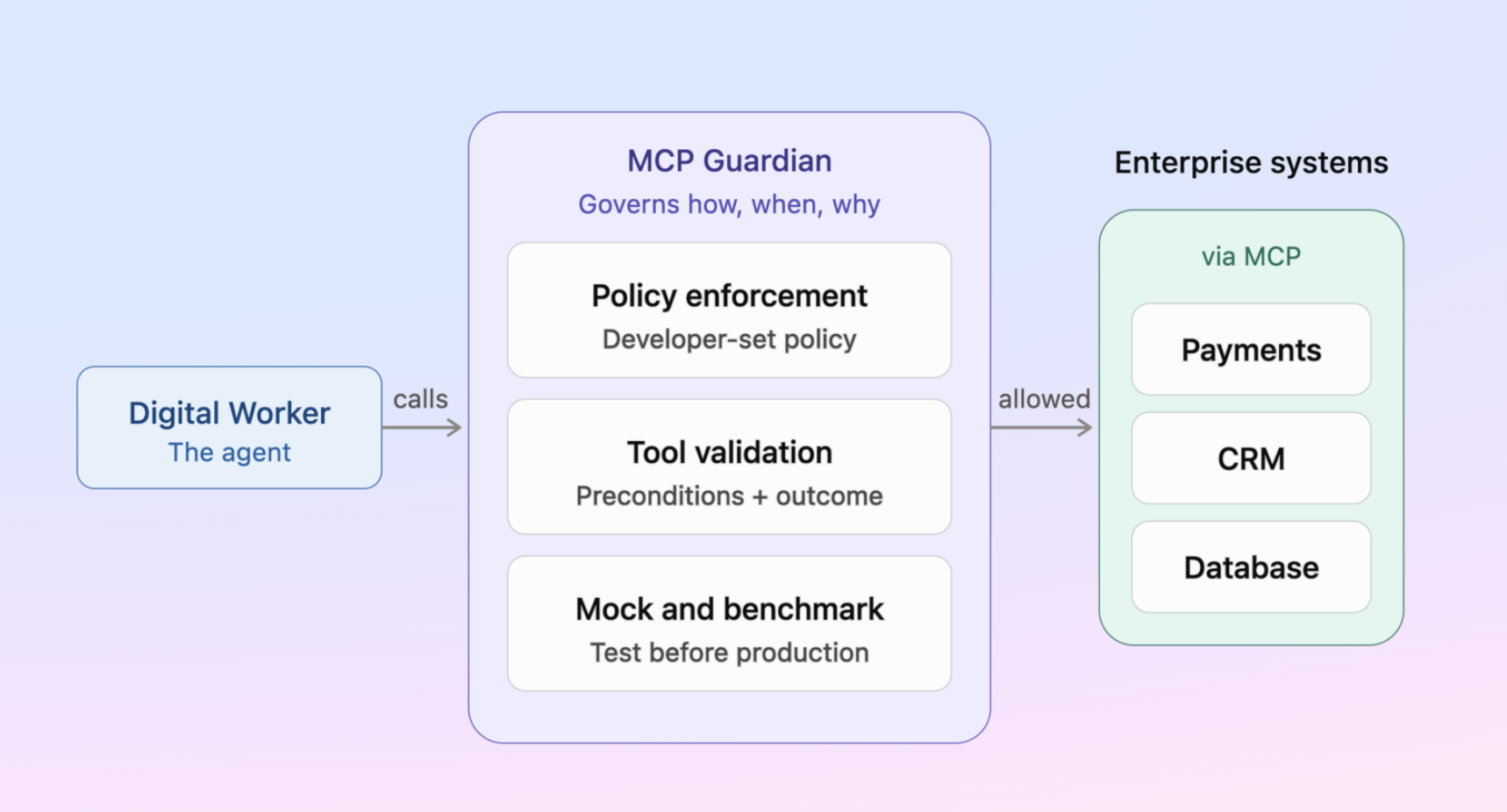
Ad-hoc integrations are the most common source of unpredictable failure across enterprise systems. Every causaLens integration runs through MCP, then gets hardened.
- A policy engine checks whether agents are using MCPs according to developer-defined policy, and blocks them when they are not.
- Prerequisite tools and conditions are verified before a call, and the outcome is validated after. A payment approval fires only when every required condition is met, and only once.
- Integrations are mocked and stress tested before production, so failure modes are found in development with no side effects.
- One integration standard instead of bespoke connectors, so there is a single place to audit how a worker touches your systems.
Digital Workers know not just what they can call, but how, when, why, and how many times.
Structured Data Module
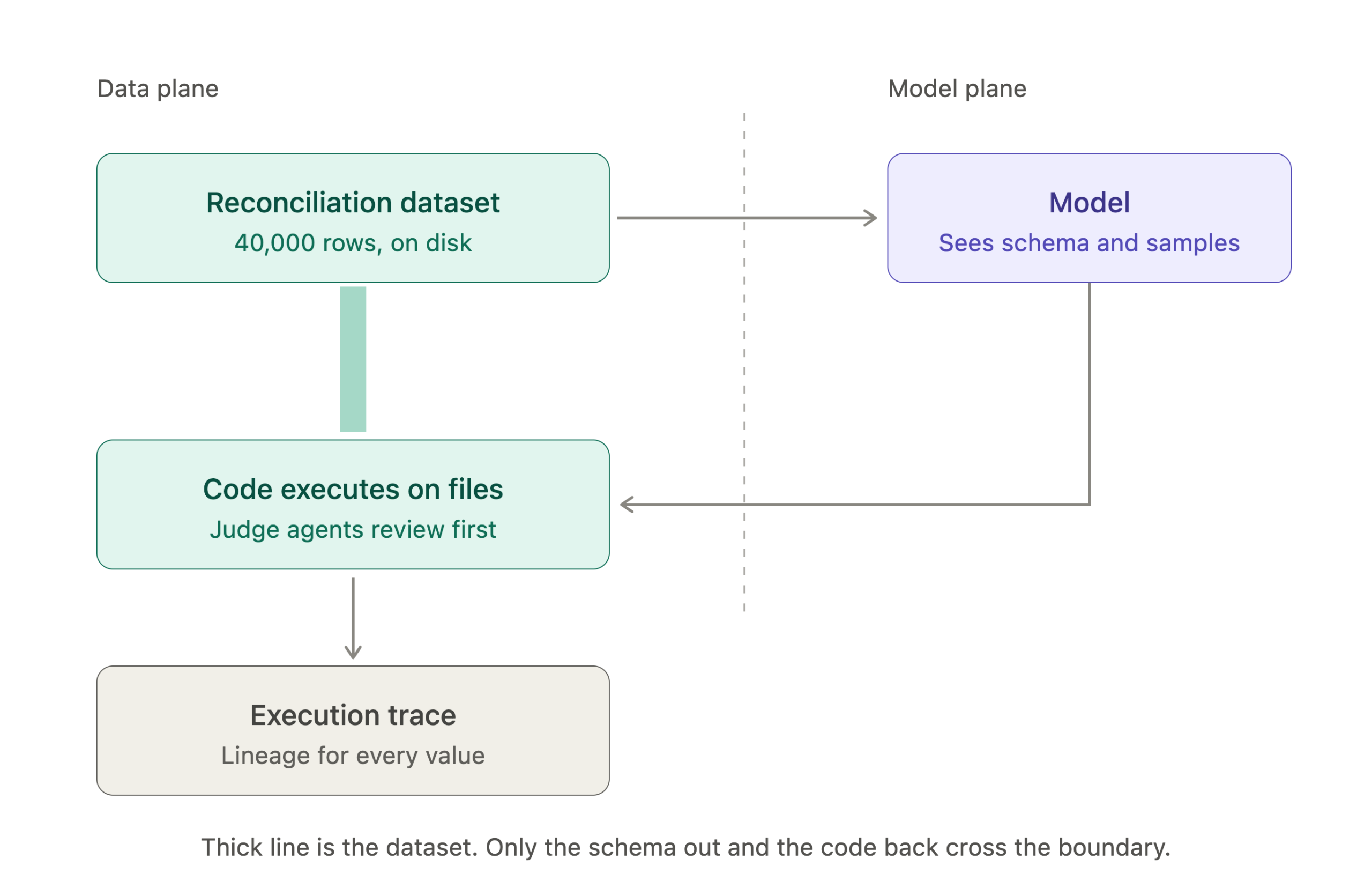
A hallucinated adjective is survivable. A flipped digit is not. In a 40,000 row reconciliation, one dropped row passes silently into decisions made months later.
- The dataset never enters the context window. The model sees the schema and a few sample rows. It never sees, holds, or edits the data.
- Every operation runs as code, on files, through auditable tools. Judge agents review the code before it executes.
- Every value traces back to its source system and every transformation applied, derived from the execution trace rather than by asking the model what it thinks it did.
Agentic Data Mesh
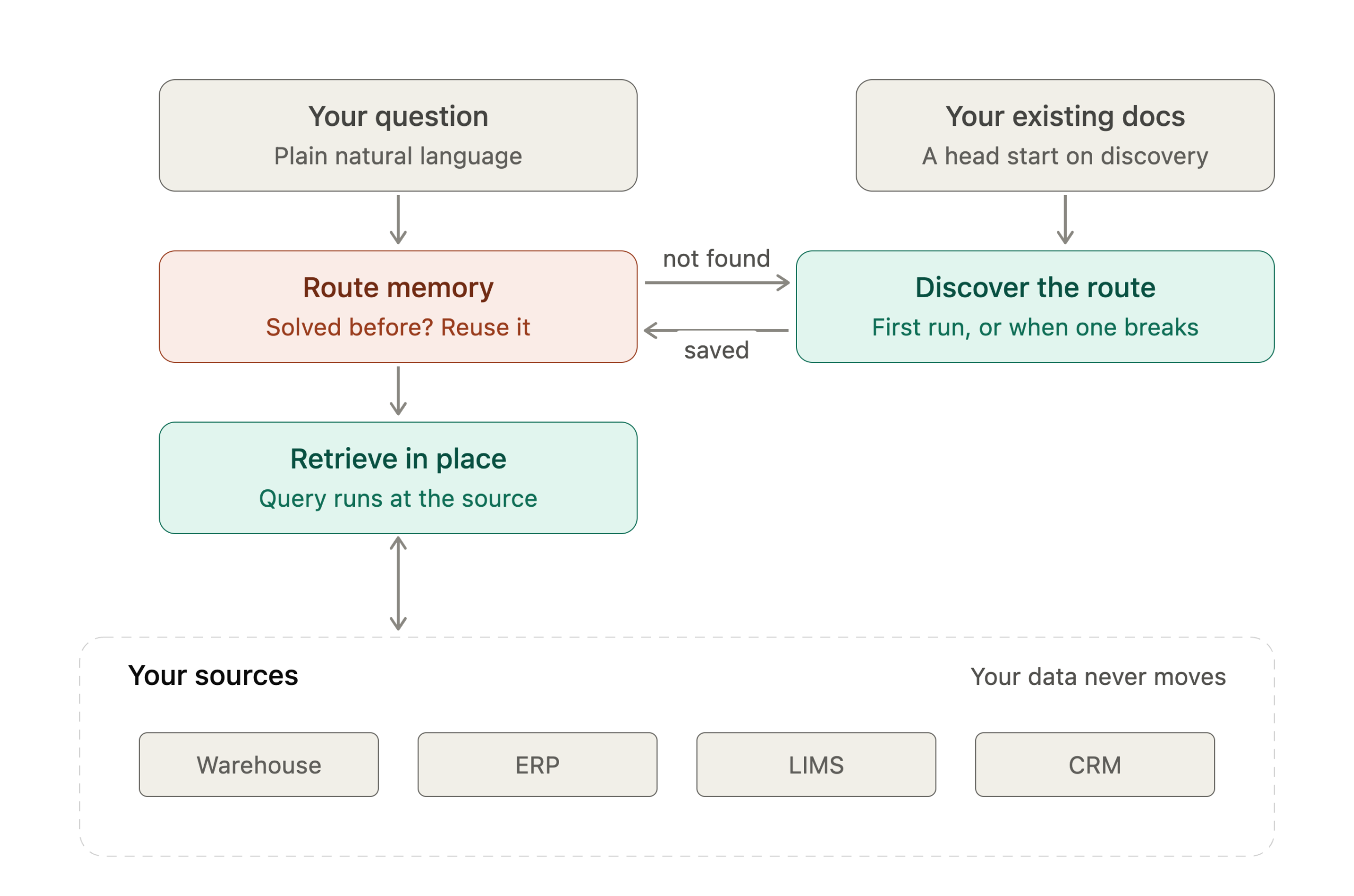
- A dynamic query layer over the sources you already have. The Digital Worker works out which columns it needs, which systems hold them, and how to retrieve them.
- No relationship graph to author and no ontology to ratify. The mesh builds its own picture of your estate as it is used, and ingests your existing documentation to get a head start.
- Discovery happens once, not every run. Every validated route to a value is written to memory and reused.
- Self healing: Schema drift stops being a fire drill. When a memorised route breaks, the agent detects it inside the run, rediscovers the path and updates itself.
Accuracy across a range of questions moved from 30 to 50% up to 90%, & run-to-run consistency from 20% to 75 to 85%
In Loop and out-of-loop Tools
Two layers of supervision: monitoring the agent while it runs, and validating runs over time to flag drift.
- Human in the loop flows. The workflow pauses and waits for input via email, Slack or any system the agent can monitor, rather than looping blindly or taking an expensive action unsupervised.
- Judges and guardrails. Quantitative judges validate structured output against concrete criteria; LLM judges validate unstructured output against the original ask. Hard stops and repetition guards detect and stop agents that go off track.
- Provenance tracking. Wraps artifact and data writes, tracing every value back through the agent to its original source and logging it for explainability and audit.
- Self-healing loop. The agent writes and stores the automation as code on first run. Later runs execute that code with no agent involved, and the agent is invoked only to patch it when it errors.
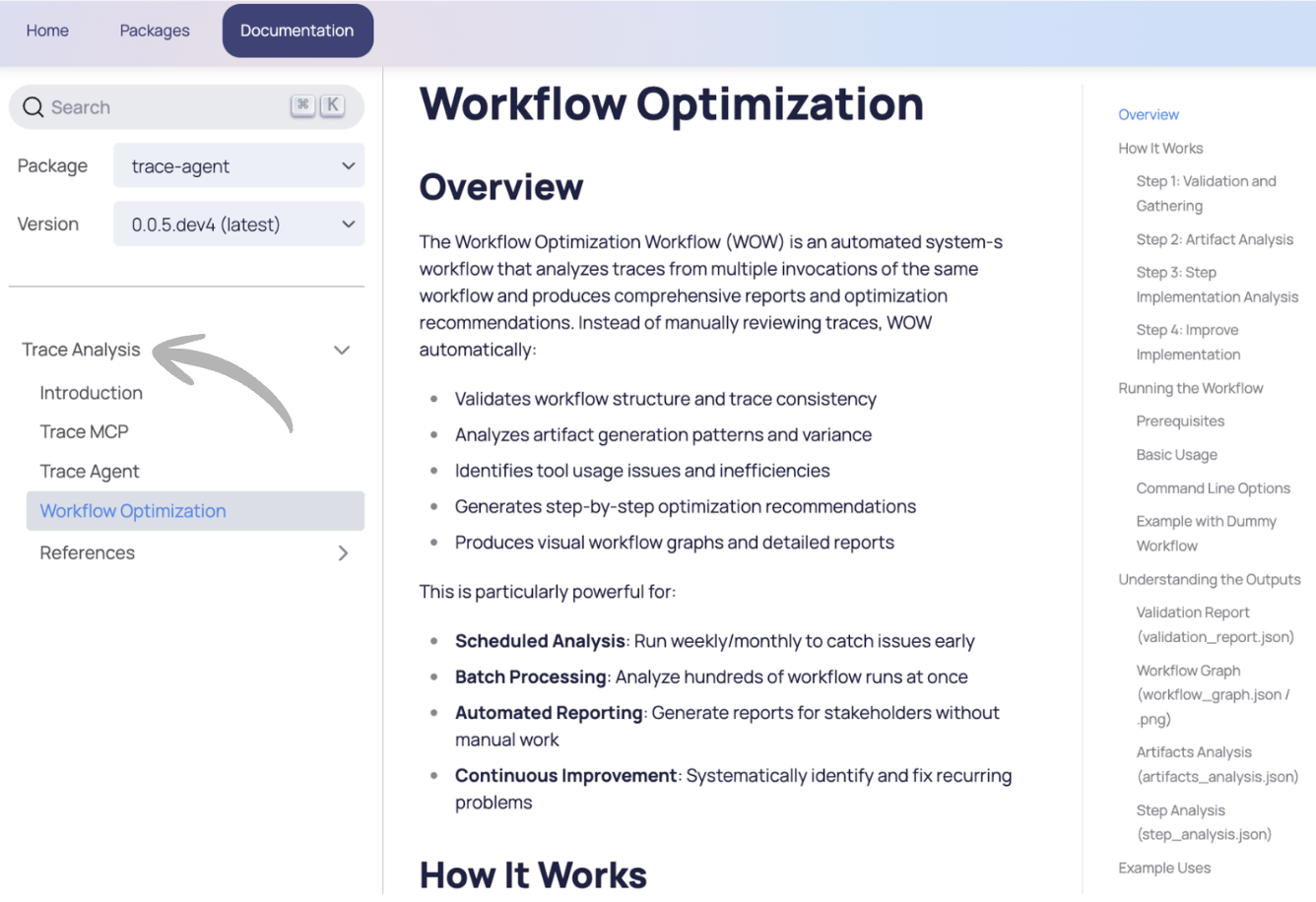
- Benchmarks and analyzers. Benchmark-first development validates consistency across a range of inputs. Prebuilt analyzers cover outputs, tool use, context health and cost, tracked over time or plugged into workflows to drive self-improvement.
Autonomous Agentic QA
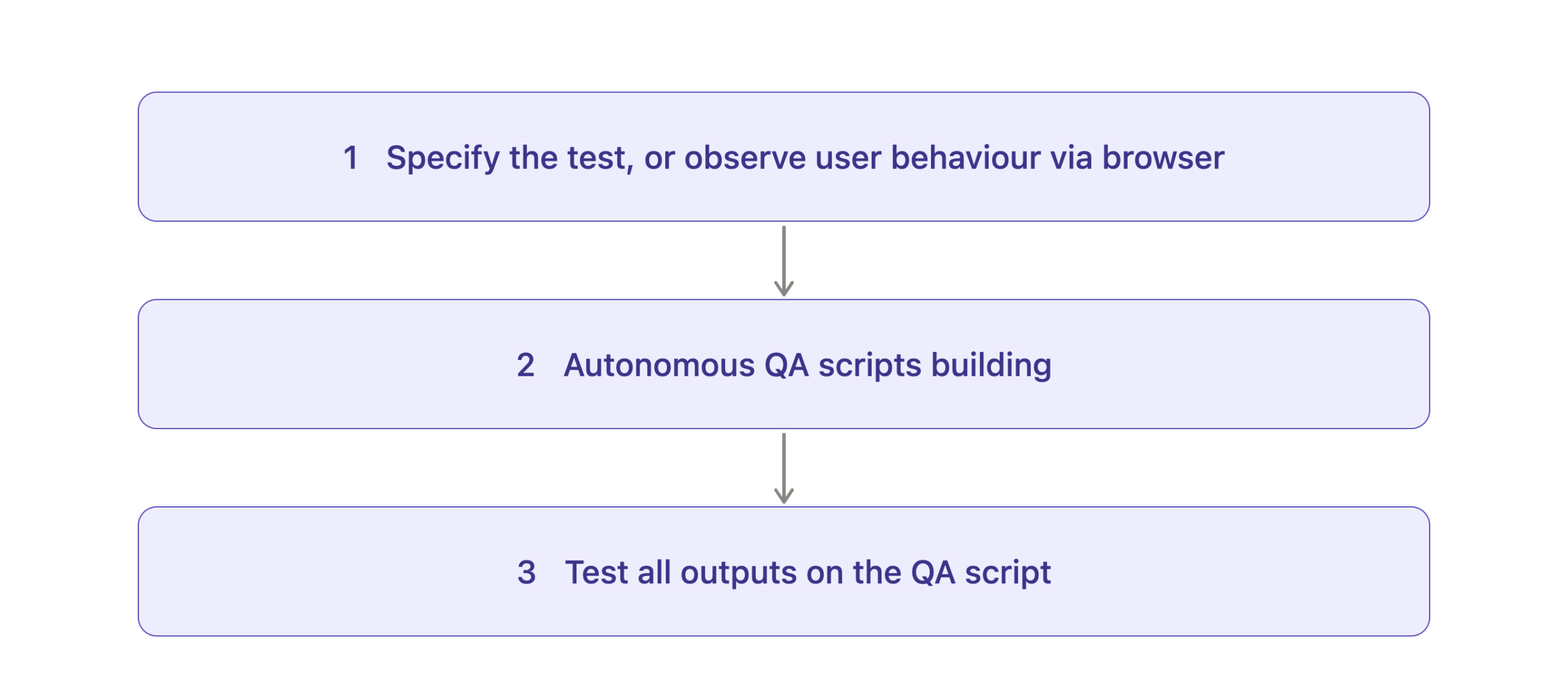
- The agent explores the application with a suite of browser tools and learns how it actually behaves, rather than guessing from a specification.
- A fully managed Playwright setup with agent-native tooling lets it write, run and iterate on tests.
- Tests are then extracted as artefacts and executed directly with no agent in the loop. The model authors tests and diagnoses failures. It never runs the suite, so tokens are not spent re-deriving the same test on every execution.
- When a stored test fails, the self-healing loop decides whether it found a real regression or whether the application simply moved.
- Interactive test mapping is next: the agent watches a real user complete a task and writes the matching test.
Digital Worker Memory
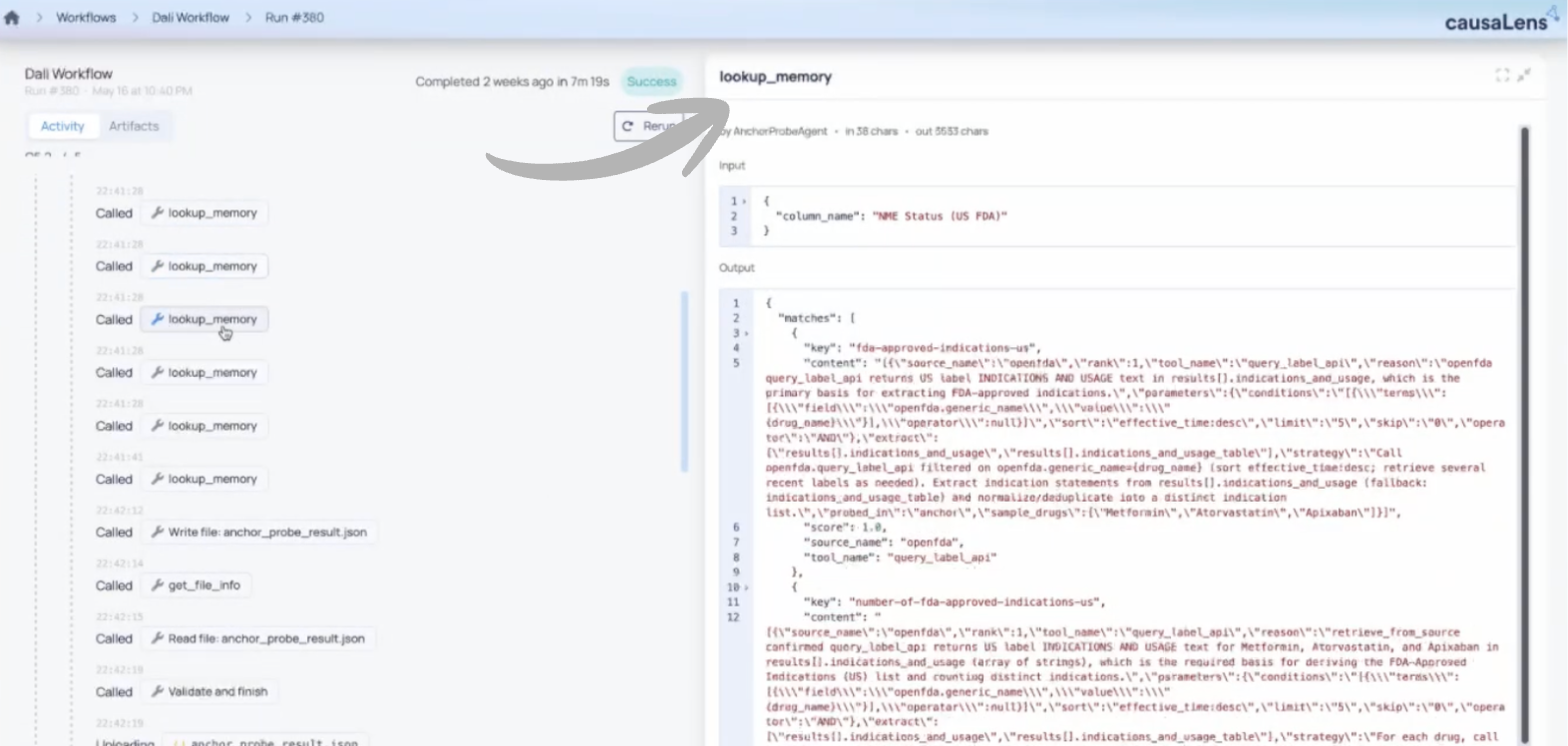
Digital Workers earn autonomy. Every correction and edge-case judgement is captured and applied on the next run.
Retrieval is not memory. RAG gives an agent access to knowledge a human already wrote down and keeps current.
Explicit read and write tools. The author controls which steps form memories and which only consume them.
Volume is the failure mode we design against. Maintenance consolidates thin observations and prunes what no longer earns its place.
Deploys in your infrastructure. Nothing leaves your walls. Admins can inspect, adjust and delete what a Digital Worker knows.
Remembering is cheaper than rediscovering. Research on procedural memory, including the Memp paper, shows reusing experience raises accuracy.
Causal Verification
Every decision produces a regulator-ready record for free. Facts and their provenance, the rule that fired, and the counterfactuals that would have flipped it, all machine-checked.
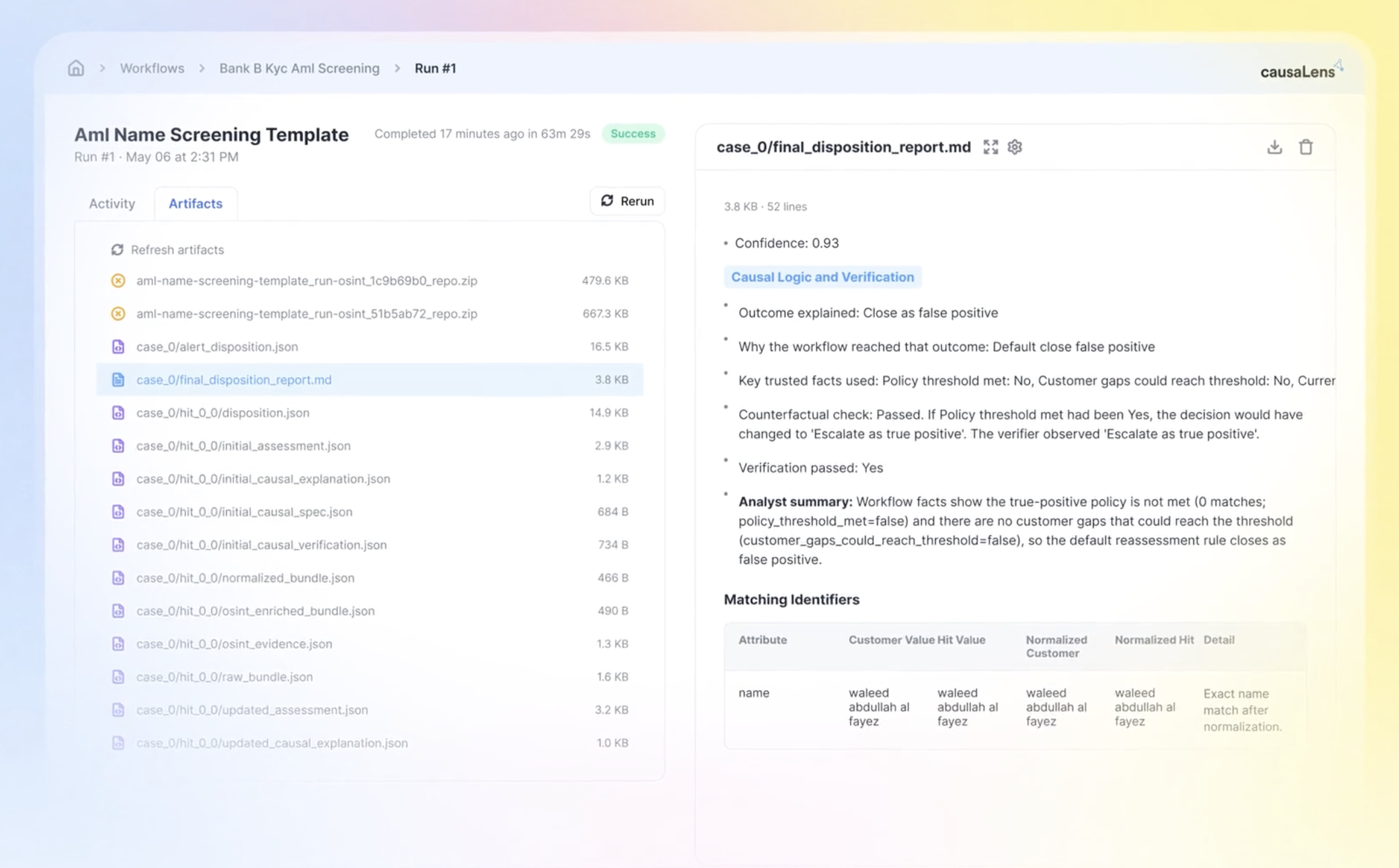
- Verified Counterfactuals. Every decision names what would have flipped it, each one mechanically tested against your rules, with impossible values rejected.
- Causal Model Authoring. Your policy defined once in code as facts and rules, with guided scaffolding so codifying a new decision takes hours, not weeks.
- Trusted Facts. Evidence your systems compute directly, locked so no agent can fabricate or override it. Decisions get verified against your data, not the model's assertions.
- Structured Decision Claims. The contract that turns an agent that decides into an agent that makes a checkable claim. Facts, a rule, a recommendation, never prose alone.
- Deterministic Verification Gate. A pure-logic checkpoint that runs before any Digital Worker can finish, and before any LLM judge. If the claim does not verify, the worker is blocked, handed the exact errors, and made to try again. It fails closed, always.
No Test, No Write Access
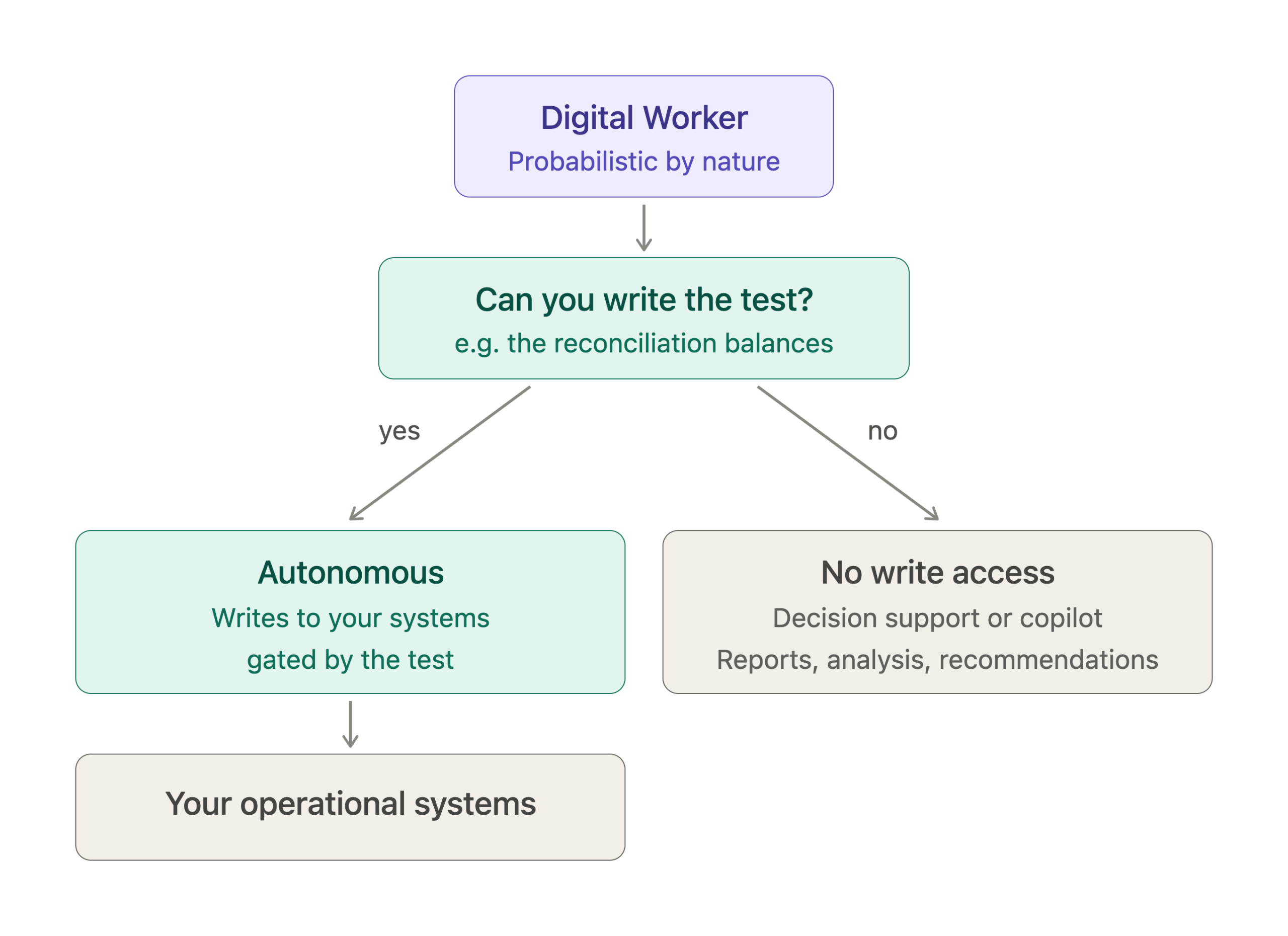
Digital Workers follow the same law. Probabilistic by nature, and that is fine, as long as every output passes a QA test against explicit criteria before it touches an operational system.
Not a vibe check. A defined test: the reconciliation balances, the submission matches source data, the contract terms fall inside policy. Design the test well and the probabilistic nature stops mattering.
The test is the deployment decision. If you can write it, the Digital Worker operates autonomously inside your systems, gated by verification.
If you cannot write it, no write access. The worker still earns its keep as decision support, or as a copilot with a human validating each action. The value is real. The write access is not.
Test or no test beats any maturity model. 88% of agent pilots never reach production, evaluation gaps the most cited blocker. 70% of leaders name non-deterministic outputs as the top barrier.
Reliability Blogs:
reliability blogs
reliability
reliability
Agentic Memory — Retrieval is not memory. Corrections get kept. Autonomy accrues the way it does with a new hire.
reliability
reliability
reliability blogs
reliability
reliability
reliability
reliability